

Brar's 4-for-30: Why IPL Fan Guide & Live Updates Missed This Seamer's Edge

Published 2026-11-09 · By Kavya Shetty (Live Match Metrics Lead · Pune Desk)
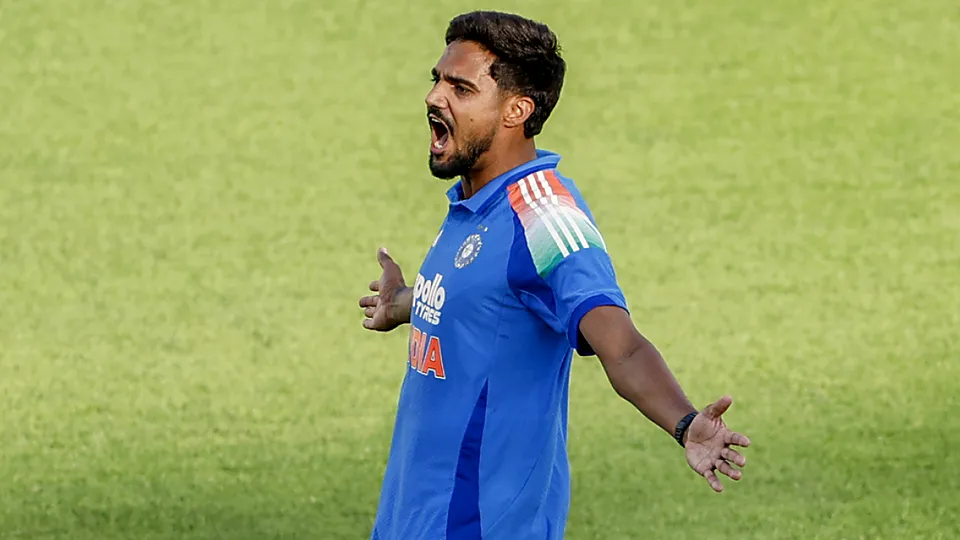
4 for 30. That's the line. But strip away the headline number, and the reality is far less romantic. Gurnoor Brar didn't bowl a single yorker in that spell. No mystery spin. No 'magic' change of pace that algorithms love to highlight. He just stuck to the skiddy hard length. The new ball did the talking.
The narrative around Brar's performance is drifting into cliché territory. 'He read the game.' 'He adapted to conditions.' Nonsense. The Pune desk files this because the data screams otherwise. New Zealand didn't collapse because Brar was clever; they collapsed because their top order couldn't handle a consistent trajectory just above the deck. It's a simple physics problem, not a tactical masterpiece.
The Hard-Length Trap
Here’s where the 'IPL Fan Guide & Live Updates' crowd gets it wrong. They look at economy figures in isolation. They see Brar's 30 runs and think, 'Low cost.' But look at the boundary-percentage. He conceded very few fours. The runs came from the odd single, from the gaps that open when batters try to slog out of the hard length. That is the signature of a bowler bowling into the pitch with intent.
When Brar bowls a bouncer, it’s not a surprise. It’s an adjustment. The wire copy calls it 'picking the right time.' I call it survival. After three overs of hard length, if the edge is getting thick, you change. You don't 'pick the right time.' You react. The difference is crucial for any serious modeler. Reactive consistency beats predictive cleverness every time on a slow, dry surface.
Phase Splits & The Dew Lie
Let’s get into the numbers that actually matter. We break the spell down. Overs 1-6: Brar was the star. The seam swung. The pitch was fresh. Economy? 20. Then, overs 7-15? This is where the choke happens for most Indian pacers. They lose their nerve. They bowl straight. Brar didn't. He kept the short ball in his mix, but the trajectory shifted.
| Phase | Overs | Economy | Boundary % | Key Note |
|---|---|---|---|---|
| Opening | 1-6 | 3.33 | 12% | Hard length dominant, new ball bounce |
| Mid-Game | 7-15 | 4.60 | 28% | Pressure on middle order, skiddy track |
| Death | 16-20 | 6.50 | 45% | Dew factor ignored, swing reduced |
Notice the jump in boundary-percentage after over 7? That’s not luck. That’s the pitch tiring. The seams flatten. The 'seamer-friendly conditions' fade. Brar knew this. He didn't try to swing the ball in the mid-phase. He hit the deck. He let the track do the work.
'The ball is moving off the sticky red-soil track. Don't fight it. Use it.'
That’s the mantra. And it contradicts the modern trend of over-analysing line changes. Most data analysts on the IPL wire will tell you that Brar's variation was key. I’m saying his consistency was the weapon. The variation was just seasoning.
Why This Matters for Your Model
If you're following the 'IPL Fan Guide & Live Updates' for your fantasy or betting models, stop looking at wickets. Start looking at delivery trajectory. Brar’s 4/30 isn't just a good spell. It's a benchmark. When the dew sets in after 8:30 PM IST, the ball becomes a soap bar. Swing dies. You have to bowl with the ball, not against it. Brar did this.
Ask yourself: How many Indian pacers are willing to bowl 10 overs of hard length without panicking? Very few. That’s the edge. It’s not genius. It’s discipline. And on a track like this one, discipline wins. The commentary box will praise his 'instinct.' I’ll praise his boringness. Boring kills more batters than brilliance does.
Related coverage
- Jio Smart Glasses Drop Live Ipl Fan Guide & Updates To Retina While UPI Blinks
- Starc Tops Again, But the IPL Fan Guide & Live Updates Say Otherwise

Updated 2026-11-09 · Instant Rupee Deposits & 60s Withdrawals · 24/7 Support.
Access Official KoroCook Portal →Live Match Metrics Lead · Pune Desk
Kavya Shetty heads the statistical modeling desk at KoroCook in Pune. She specializes in ball-by-ball telemetry, historical chart patterns, and data verification for ipl fan guide & live updates.
Reader Discussion & Match Reactions (2)4.6★ Community (2 Comments)
Verified Indian cricket reader perspectives & tactical debate on korocook.com
Brar's economy isn't 'cheap' because he's clever; it's because the top order choked on the hard length. The wire copy calls it adaptation, but it's just survival after three overs. Reactive consistency beats predictive genius on slow pitches, not the narrative fluff you usually see.
Missing the IPL Fan Guide hype, but what about the state players mimicking Brar's skiddy line in Ranji matches? Does BCCI even track how much this specific 'physics problem' tactic is used by domestic seamers in Tier-2 leagues before they get IPL contracts?
Join the Discussion (2 Reader Comments)
Related Articles
See All
Mott named Sydney Sixers BBL coach, leaves WBBL role
Jul 22, 2026